
Non-Healing Wound Treatment Specialist Serving Colmar, Lansdale, PA
At Lansdale Plastic Surgery, Dr. Floyd Herman, MD, specializes in the treatment of non-healing wounds. Using advanced, personalized techniques, Dr. Herman addresses chronic wounds that resist traditional healing methods. His approach combines medical expertise and cutting-edge treatments to promote healing and restore skin integrity. Whether caused by injury, surgery, or other conditions, Dr. Herman and his team provide comprehensive care to help you achieve faster, more effective recovery. Trust our experts to guide you through the healing process with the best possible care. For more information, contact us today or book an appointment online. We are conveniently located at 2405 North Broad Street, Colmar, PA 18915.
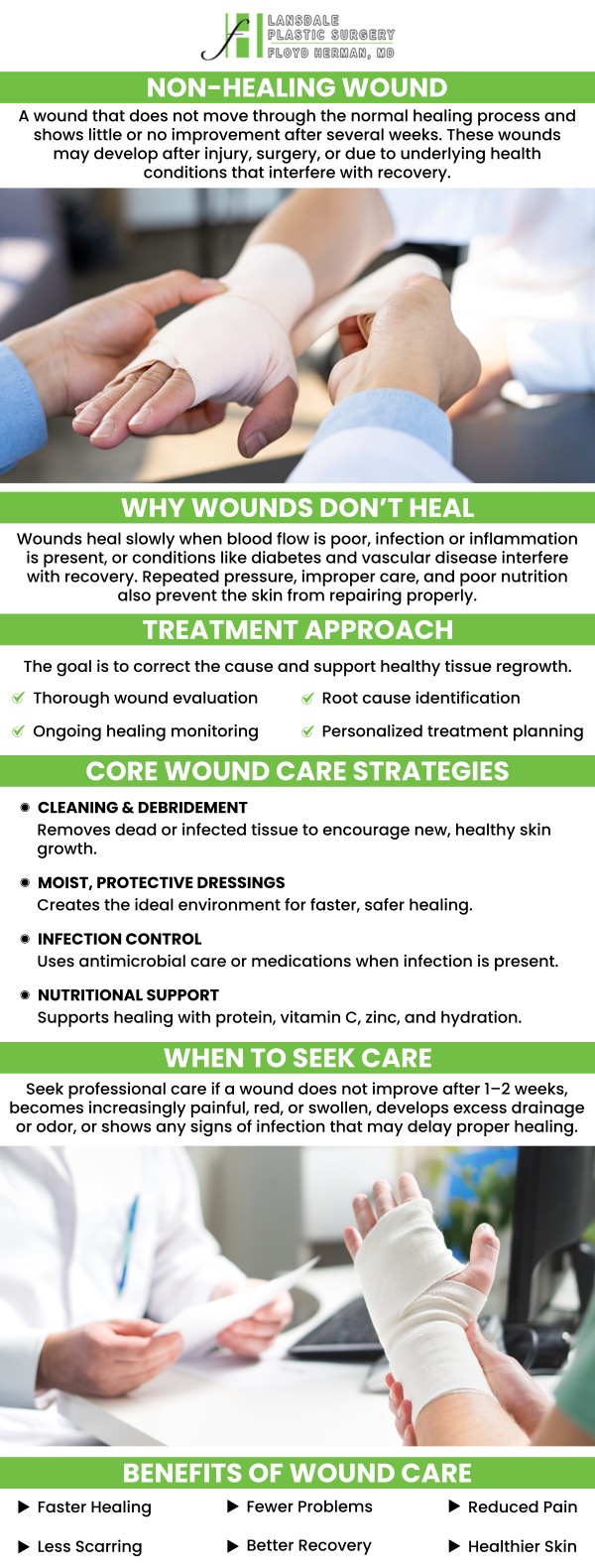
Table of Contents:
What is the fastest way to heal a chronic wound?
How do you treat a wound that will not heal?
How do you heal a wound that keeps opening?
Can a chronic wound ever heal?
Dr. Floyd Herman, MD’s Non‑Healing Wound Treatment Approach
A chronic wound is a wound that does not progress through the normal stages of healing and fails to show significant improvement within about four weeks. Our team specializes in the comprehensive management of chronic and non-healing wounds, providing advanced care options tailored to each patient’s unique needs.
The fastest and most effective way to heal a chronic wound involves a thorough approach that addresses both the wound itself and any underlying medical conditions, such as diabetes or vascular disease, which can significantly slow the healing process. Our experienced providers carefully evaluate each patient’s overall health, ensuring that any contributing factors are managed alongside direct wound care.
Key steps in our chronic wound management program include:
• Wound Cleaning and Debridement: Our surgeons expertly remove dead or unhealthy tissue to promote a healthy healing environment and prepare the wound for optimal recovery.
• Moist Wound Healing: We use advanced dressings to maintain a moist environment, which has been shown to accelerate the healing process compared to traditional dry dressings.
• Infection Control: If there are signs of infection—such as increased redness, warmth, swelling, or discharge—we may prescribe targeted antibiotics or recommend topical antimicrobial treatments to prevent complications.
• Nutritional Guidance: Proper nutrition is essential for wound healing. We work with patients to ensure they receive adequate protein, calories, and crucial vitamins like vitamin C and zinc to support tissue repair.
Regular assessment and care by the specialized team is the best way to ensure your chronic wound heals efficiently and safely. Attempting to self-treat or delaying professional care can increase the risk of complications and prolong recovery.
We understand that proper wound healing is essential to achieve the best possible outcomes—whether you’re recovering from surgery or dealing with a persistent wound. If a wound is not healing as expected, it is important to address both the wound itself and any underlying factors that may be interfering with the healing process.
After any surgical procedure, we provide detailed instructions to keep your incisions or wounds clean and protected. Gently washing the area with mild soap and water is typically recommended, while avoiding harsh chemicals or hydrogen peroxide that can damage healing tissue. We also stress the importance of using a sterile dressing to protect the area from infection and further injury. Our team will instruct you on how often to change your dressing and what signs of infection to watch for, such as increased redness, swelling, pus, or a foul odor.
If your wound does not show noticeable improvement within one to two weeks, or if you notice signs of infection or worsening symptoms, we encourage you to contact us promptly. Our surgeons and nursing staff are experienced in evaluating and managing wounds that may be slow to heal. We will assess for possible causes such as infection, poor blood supply, underlying medical conditions like diabetes, or other factors that may delay healing.
Depending on your needs, we may recommend advanced wound care treatments, such as specialized dressings, topical medications, or procedures to improve blood flow and promote healing. If necessary, we may also collaborate with wound care specialists for therapies such as negative pressure wound therapy, hyperbaric oxygen treatment, or surgical intervention.
We understand that the healing process is a vital part of achieving your best results. Occasionally, patients may notice a surgical wound or incision that seems to reopen or isn’t healing as quickly as expected. While this can be concerning, a combination of good wound care, awareness of risk factors, and prompt professional medical attention can make a difference.
It is crucial to keep your incision clean to avoid infection, which can significantly delay healing and impact surgical outcomes. Gently cleanse the area as advised by your provider—usually with mild soap and water—then pat it dry. Using a non-adherent dressing, as recommended by your surgeon, helps protect the wound from further trauma and maintains a moist environment conducive to healing.
If your surgical site is located in an area that moves frequently or bears weight (such as the abdomen, limbs, or face), try to minimize movement and avoid putting stress on the skin. Repeated stretching or pressure can cause the wound to reopen. We may advise you to restrict certain activities during recovery to prevent this issue.
Good nutrition is essential after any plastic surgery procedure. Adequate protein, vitamins, and minerals help your body repair tissue and close wounds efficiently. If you have conditions like diabetes or circulation problems, be sure to manage these closely, as they can slow recovery. Let our team know about any chronic health issues during your preoperative consultation.
We understand that chronic wounds can be a significant challenge for many patients. A chronic wound is one that does not heal in the expected timeframe and may persist for weeks, months, or even longer. Common examples include diabetic foot ulcers, venous leg ulcers, and pressure sores. The healing potential of a chronic wound depends on several factors—including underlying medical conditions, the patient’s overall health, and the quality of wound care provided.
Our practice specializes in the comprehensive management of chronic wounds, combining advanced plastic surgery techniques with personalized patient care. In many cases, chronic wounds can heal, but the process is often slower and more complex than with acute injuries. Successful treatment requires not only meticulous wound care but also management of contributing factors such as diabetes, poor circulation, and infection.
We utilize state-of-the-art wound care methods, including:
• Advanced dressings
• Negative pressure wound therapy (wound vacs)
• Skin grafts and tissue flaps
• Growth factor treatments
These interventions, combined with our expertise in reconstructive surgery, can significantly improve healing outcomes for patients with stubborn wounds. Our multidisciplinary approach involves close collaboration with other medical professionals—ensuring that nutrition, blood sugar control, infection management, and other key factors are all addressed.
While not all chronic wounds can heal completely, our goal is to maximize healing, reduce pain and complications, and restore quality of life. Early consultation and consistent, comprehensive care are critical. If you or a loved one is struggling with a chronic wound, our team is here to provide expert evaluation and a personalized treatment plan designed to promote the best possible outcome.
At Lansdale Plastic Surgery, Dr. Floyd Herman, MD, treats non‑healing wounds with targeted therapies, addressing root causes like poor circulation or infection. His method ensures thorough healing by using advanced dressings, vascular support, and tailored treatments, restoring the skin’s natural healing process. His approach includes a full evaluation to address factors like circulation, nutrition, and infection. Dr. Herman offers personalized treatment plans to help patients heal effectively and restore skin integrity. For more information, contact us today or book an appointment online. We are conveniently located at 2405 North Broad Street, Colmar, PA 18915. We serve patients from Colmar PA, Montgomeryville PA, Lansdale PA, Skippack PA, Harleysville PA, Hatfield PA, Blue Bell PA, and surrounding areas.
Check Out Our 5 Star Reviews



Additional Services You May Need
▸ Hand Rejuvenation
▸ Body Contouring
▸ Facial Rejuvenation
▸ Skin Conditions
▸ Arm Lift
▸ Biomax Led Therapy
▸ Blepharoplasty
▸ Body Contouring
▸ Botox & Fillers
▸ Breast Augmentation
▸ Breast Implant Exchange
▸ Breast Implant Removal
▸ Breast Lift
▸ ChinLift
▸ Clinical Facials
▸ Ear Surgery
▸ Facelift
▸ Facial Implants And Flaps
▸ Fat Transfer/Grafting
▸ Female Breast Reduction
▸ Hand Rejuvenation
▸ Hand Surgery
▸ Hyperhidrosis
▸ Juvéderm
▸ Laser Hair Removal
▸ Laser Skin Rejuvenation
▸ Liposuction
▸ Male Breast Reduction
▸ Microneedling
▸ Mommy Makeover
▸ Necklift
▸ Radiesse®
▸ Restylane®
▸ Scar Revision
▸ Skin Cancer Removal
▸ Skin Cyst Removal
▸ Skin Excisions
▸ Skin Lesion
▸ Skin Mole Removal
▸ Tummy Tuck
▸ Upper Lower Eyelid
▸ CO2 Laser Resurfacing


 Send Text
 How May I Help You?